Choreographed Dance with Anime Style Overlays
This case stands out because the visual effect is driven by choreography instead of being added as decoration. The performer's hands define a visible frame,…
The idea / HolyCrab
Choreographed Dance with Anime Style Overlays
A creative video prompt for generating a dancing sequence where hand gestures create animated frames featuring anime and Spider-Verse inspired visuals.
Source prompt
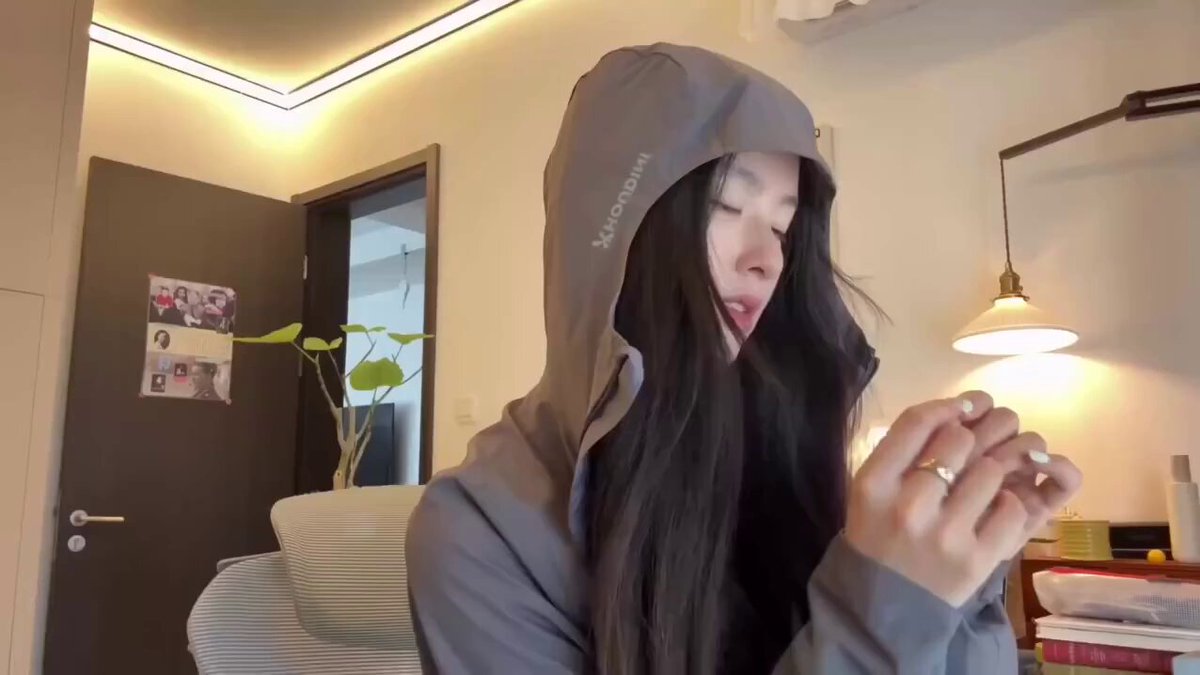
Setting: A cozy indoor room with warm, ambient lighting, featuring posters on the wall, a hanging lamp, and modern furniture.

Subject: A young woman with long dark hair, wearing a gray hooded jacket, performing a rhythmic, choreographed hand and body motion dance in front of the camera.

Key Visual Effects:

Animated Framing & Transitions: As she moves her hands to form frames and geometric shapes (triangles, rectangles) in front of her face and upper body, colorful animated overlays appear inside the framed spaces.

Anime & Superhero Styles:

The initial overlays display an anime-style digital avatar matching her expressions.

Midway through, the overlay switches to a Spider-Gwen / Spider-Verse comic style, complete with a hooded mask and neon cityscape backgrounds.

The animation dynamically shifts and transforms along with her hand movements, smoothly blending back into real life by the end of the clip.HolyCrab
Editor's note
This case stands out because the visual effect is driven by choreography instead of being added as decoration. The performer's hands define a visible frame, that frame triggers an animated layer, and the effect returns cleanly to live action at the end.
Prompt breakdown
Causal gesture
Triangles and rectangles formed by the hands act as explicit triggers. The overlay should appear inside the framed area and follow the performer's timing.
Style progression
The sequence begins with an anime avatar, evolves into a neon comic-book look, and resolves back into the original room rather than cutting to an unrelated world.
Subject stability
Hair, gray hooded jacket, face, body proportions, and dance rhythm stay consistent while only the visual treatment inside the hand-made frame changes.
Transition end state
The final movement removes the animated layer and leaves the performer in the same real room, which gives the transformation a readable conclusion.
How to use this prompt
- Use a short motion reference for the choreography and a separate image for the performer's identity.
- State that the motion reference supplies timing only; do not inherit its person, clothing, or room.
- Keep one transformation trigger per gesture so the model does not stack several styles at once.
Seedance workflow
Seedance 2.5 Prompt Optimizer Skill
Download the Seedance-specific Skill for Codex to structure references, timing, camera movement, and audio more reliably.MiniMax H3