
22 / Official demonstration · reusable starting point
A latte demo in Mandarin
Coffee preparation with Mandarin commentary; add your own packaging reference.
Complete prompt
Make a Hot Latte with This Bag of Beans|30-second coffee product demo short video Prompt. Generate a 30-second, 16:9 widescreen live-action short video of coffee preparation, with Mandarin spoken commentary. The scene is a street-corner coffee shop lit by morning light: a light wood counter, an espresso machine, a white porcelain cup and a stainless steel milk pitcher. The barista stands behind the counter, demonstrating coffee making as if teaching a customer in front of them, with a natural tone and clearly stated exact gram measurements. When a product reference is required, @image1 only locks the pouch shape, color, branding and printed text of the coffee bean package. 0–4 seconds|Open the bag, let the audience know which beans you are using today. Counter-height half-body medium shot. The barista places the bean bag facing the camera next to the digital scale, opens the bag opening while speaking directly to the audience. The shot cuts to the bean dosing cup following his line of sight; the first portion of beans falls in, with crisp clinking sounds audible. Spoken commentary: 「今天用这包豆,做杯你在家也能复刻的热拿铁。」(Today we will use this bag of beans to make a hot latte you can replicate at home.) 4–9 seconds|Weigh the beans, grind the grounds, tamp the bed. Top-down shot of the scale surface, the dosing cup has been tared, and beans are added until the total weight reaches 18 grams then stops. Three consecutive actions follow: the weighed beans are poured into the coffee grinder; ground coffee falls into a double portafilter basket; the barista spreads the grounds evenly and tamps vertically, lifting the tamper to reveal a complete, perfectly flat bed of grounds. Spoken commentary: 「十八克豆,磨细。粉先铺匀,再压平。」(18 grams of beans, ground fine. Level the grounds first, then tamp down.) 9–14 seconds|Pull the espresso, explain the stopping standard. The barista locks the portafilter into the group head, and the white porcelain cup is placed on a tared coffee scale. Low-angle close-up that shows dark brown espresso flowing from the double spout into the same cup. One cut skips the middle waiting time; when the shot returns the scale reads nearly 36 grams, the barista stops the extraction, and the final drop lands on the espresso crema. Spoken commentary: 「这杯我取三十六克浓缩。记住,是咖啡液的重量。」(For this drink I will pull a 36-gram espresso. Remember, that is the weight of the brewed coffee liquid.) 14–21 seconds|Steam the milk, film clearly what constitutes proper texture. Approximately 150ml of refrigerated milk is poured into the pitcher. The tip of the steam wand sits close to the milk surface; first a short, soft air intake sound is heard, then the barista slightly lifts the pitcher to submerge the wand tip below the milk surface, making the milk swirl along the inner wall of the pitcher into a vortex. The barista moves the pitcher away after turning off the steam. The camera moves close to the pitcher opening: he twists his wrist gently, the fine microfoam flows together with the milk, and the window light forms a bright glowing arc on the surface. Spoken commentary: 「先让奶面轻轻进一点气,再让牛奶转起来。看,表面发亮,没有大泡就好了。」(First introduce a small amount of air to the milk surface gently, then get the milk swirling. See, when the surface is glossy and there are no large bubbles, it is perfect.) 21–27 seconds|One continuous shot showing blending and latte art. Top-down shot from over the barista's shoulder, the cup rim, the pitcher spout and both of his hands remain in frame at all times. He tilts the previous espresso cup slightly with his left hand, and pours a thin stream of milk from a slight height with his right hand, letting the white milk sink into the coffee until the entire cup surface becomes a uniform hazelnut brown. Next he brings the pitcher spout close to the liquid surface, increases the milk flow slightly to push a white circular dot, finally lifts the pitcher spout, and draws the fine stream forward through the center of the dot to finish a small heart pattern. The pattern takes shape gradually as the milk flows. Spoken commentary: 「先高一点,把奶和咖啡融匀。再贴近推个圆,提起来,穿过去。」(Pour from a slightly higher height first to blend the milk and coffee evenly. Then move close to push a dot, lift up, and draw through the center.) 27–30 seconds|Final drink and product package in the same frame. The barista places the cup gently next to the bean bag, turning the cup handle to face the audience. The shot holds on the front of the counter: the foreground clearly shows the heart pattern and the smooth cup surface, while the background clearly shows the exact coffee bean package used for the preparation. Spoken commentary: 「想复刻这杯,就从这包豆开始。」(If you want to replicate this drink, start with this exact bag of beans.) Audio and visual requirements: the opening and closing spoken commentary must perfectly sync to the barista's lip movements, and the same person's voice is used for all preparation segments. A soft, upbeat instrumental track plays at low volume as background, ensuring that the grinder noise, short air intake sounds and cup-setting-down sounds are clearly audible. The entire short uses the exact same bag of beans and the exact same espresso shot; the actual duration of extraction and milk steaming is compressed via editing, while the latte art action is kept fully continuous. All printed text on the real product package is preserved; no fictitious origin, awards, discounts or product benefits are added.
Reference assets
Your packaging image is required. The source document did not include it; upload your own before generating.
Continue exploring
 24s · 16:9
23 / FLASH
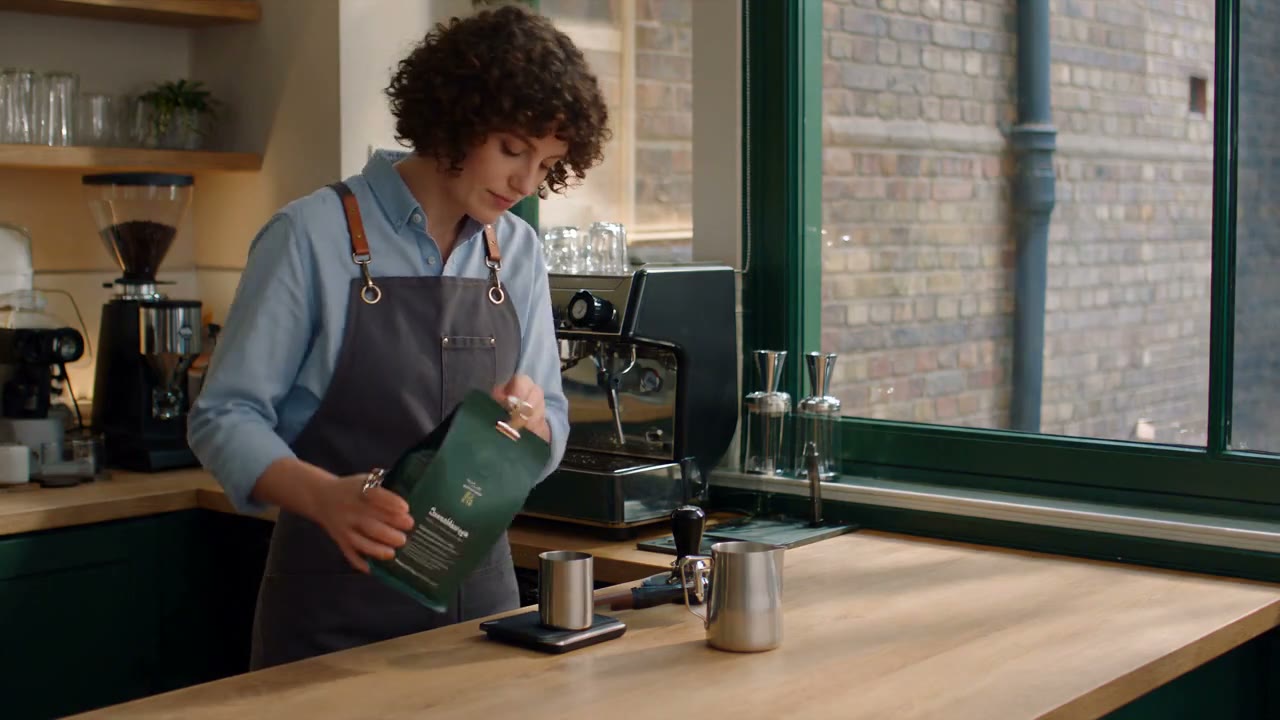
A latte demo in British English
A London cafe product demo with British English spoken commentary.
 24s · 16:9
24 / FLASH
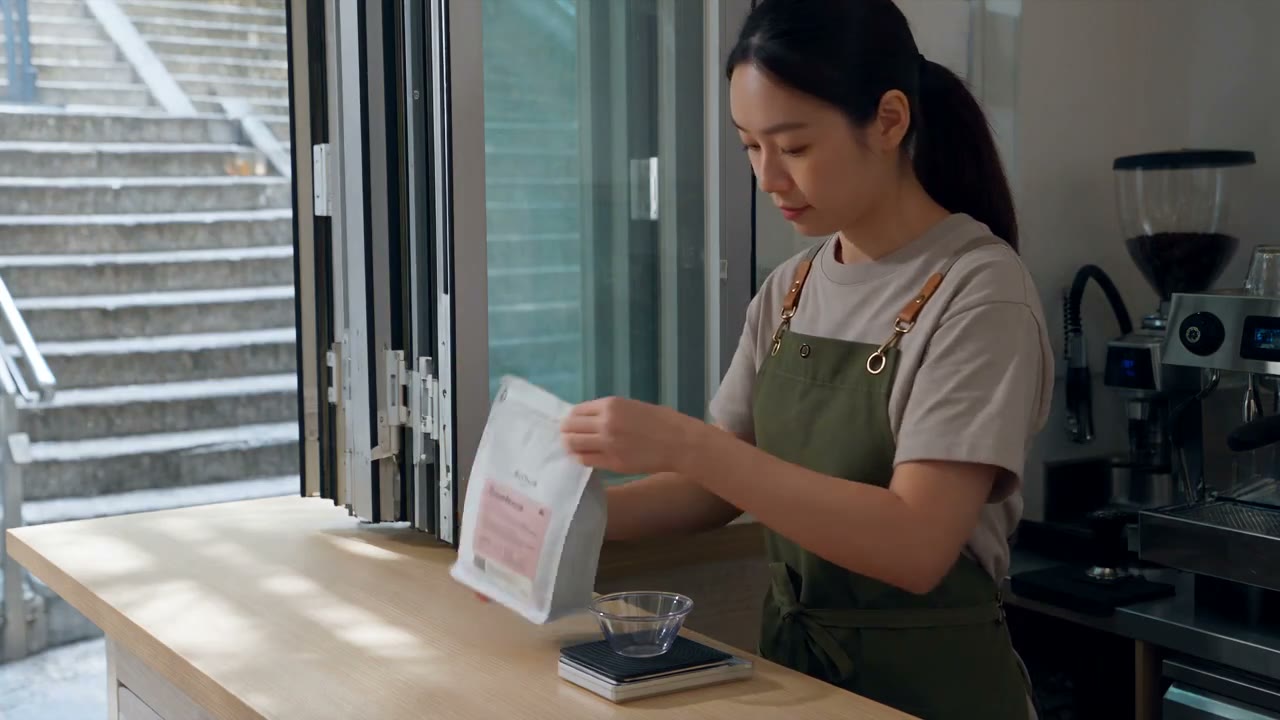
A latte demo in Cantonese
Cantonese commentary follows the barista’s preparation actions.
 15s · 16:9
10 / FLASH
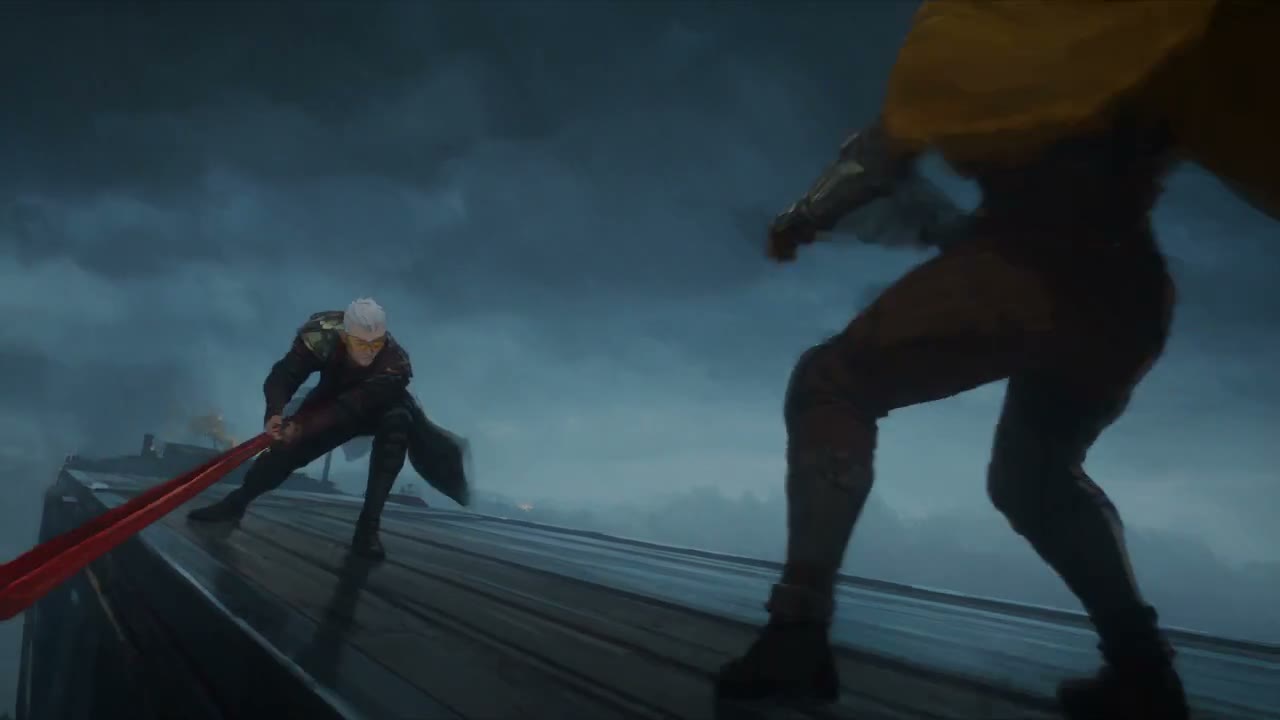
A duel on a moving maglev
A compact 15-second prompt for two coordinated fighters in a moving environment.
Examples and original prompts: ByteDance. These are source demonstrations, not outputs generated or benchmarked by HolyCrab. Different runs can produce different results. ByteDance source document ↗